



BIM has grown rapidly into one of the most important tools in construction, particularly for engineering consultants who are engaged with challenging projects. At Gadiyar Engineering, precision, coordination, and timeliness mean everything, and that is where BIM often plays the lead role in team alignment to produce better results.
What is BIM?
Building Information Modeling, or BIM, is the digital process to assist project teams in creating and operating intelligent 3D models of a building or infrastructural project. These models have comprehensive data on all aspects of the model, including structural aspects, electrical aspects, materials, and maintenance data.
Rather than individual drawings and detached updates, everyone operates on one coordinated model. It implies that the work of architects, engineers, contractors, and facility managers can proceed without conflicts and misunderstandings, which typically lead to time wastage.
Why BIM Matters in the Construction Industry
Construction projects move at rapid paces and often involve multiple teams working simultaneously. BIM brings structure to this complexity. It provides a common digital platform that reduces the chances of miscommunication since it ensures that all parties can access relevant and correct information.
One of the major reasons BIM has become important is early clash detection. Engineering consultants identify system conflicts with a 3D model well in advance of construction. Consequently, expensive changes on-site are avoided, and projects stay within their projected timeline.
BIM also enhances cost and time estimates by giving the team a very clear picture of the requirements of a project right from the outset. This level of accuracy supports better decision-making and smoother project planning.
Key Benefits of BIM for Engineering Consultants
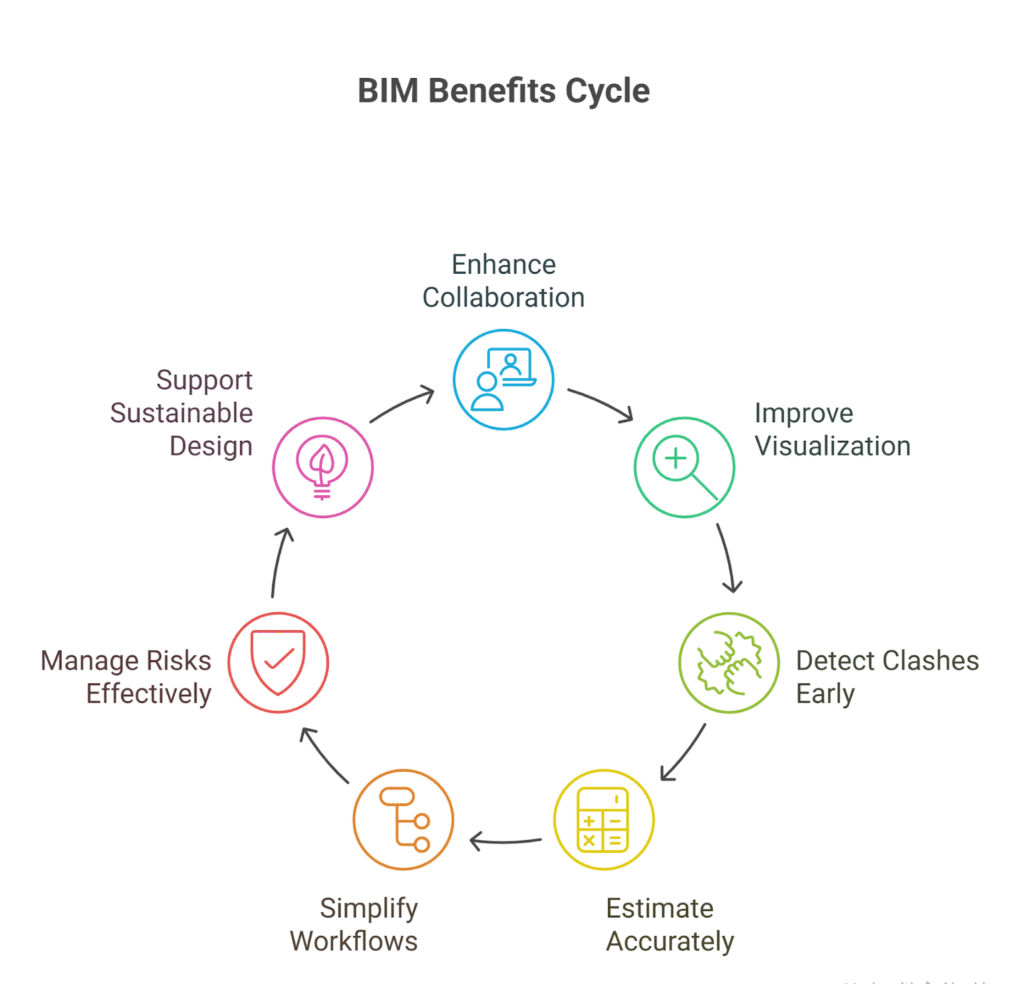
BIM can support engineering consultants in many ways. Here are some of the most valuable benefits for teams at Gadiyar Engineering:
Better Collaboration Across Teams
Because all stakeholders are based on one model, everyone is on the same page. Mechanical, electrical, plumbing, structural, and architectural teams can coordinate in real time and avoid any possibilities of miscommunication.
Improved Visualization
Traditional 2D drawings can sometimes be confusing. BIM brings designs to life through 3D visualization, which makes it a lot easier to understand how all systems will fit together. This also helps clients understand the project more clearly.
Early Clash Detection
One of the biggest advantages is finding system clashes early. For instance, a duct may overlap a beam, or a cable tray may interfere with a wall. BIM catches those issues early and prevents on-site rework.
Accurate Estimates of Cost and Time
Engineering consultants can develop more accurate quantity takeoffs, schedules, and cost projections using BIM. This enhances planning and helps the client manage their budgets more appropriately.
Workflow Simplification
Workflows are accelerated and simplified with integrated digital data. There’s less time wasted in information searches and more focus and time invested in quality output.
Better Risk Management
BIM offers the advantage of risk visibility at an early stage. Understanding potential challenges well in advance empowers teams to prepare superior strategies to deal with those situations.
Support for Sustainable Design
Energy performance, materials, and building efficiency can be analyzed with BIM tools. This will support the consultants who want to design eco-friendly and sustainable solutions.
BIM Implementation for Engineering Consultants
BIM implementation, for any consulting team or Gadiyar Engineering, works best when there is a structured plan. It typically involves:
- Setting Up Software & Tools
Proper selection of the right BIM tools and establishing a sound technical foundation. - Staff Training
Training engineers and designers to use BIM effectively. - Creating a BIM Execution Plan
A clear plan outlines workflows, responsibilities, naming standards, and modeling guidelines so everybody remains on the same page. - Management Support
The work processes are more organized and smooth when top teams are favorable to BIM implementation.
When well applied, BIM assists the engineering consultants in coming up with the right design, eliminates mistakes, and aids in the effective coordination between the concept and the finished product.
Challenges with BIM Implementation.
There are many benefits of BIM, although there are serious issues that will be examined.
- Resistance to Change
Part of Some team members may be accustomed to the old ways of working and may not be able to adjust to the digitization processes. - High Initial Costs
Software, hardware upgrades, and software and training programs are costly to license. - Lack of Skilled Personnel
There is often a shortage of professionals who are trained in BIM tools and workflows. - Software and Data Issues
Adoption is sometimes slowed down by issues of compatibility, data management, and model accuracy.
Despite these challenges, the long-term benefits of BIM far outweigh the initial struggles.
How Gadiyar Engineering Can Benefit from BIM Adoption
BIM is transforming the manner in which engineering consultants handle construction projects. It assists teams to work together in a more effective way, identify problems at an earlier stage, and make decisions that are all informed to result in a smooth and cost-efficient project delivery. In the case of Gadiyar Engineering, BIM would be a chance to take quality, efficiency, and innovation to another level.To remain at the forefront in the modern construction environment, BIM practices will be an effective move by Gadiyar Engineering in adopting and enhancing the practice.